How Imaginative Play with Action Figures Supports Child Development
The Science Behind Action Figure Play and Cognitive Growth
In an increasingly digital world, parents often wonder about the value of traditional toys like action figures. The good news? Research from leading child development experts, including studies published by the American Academy of Pediatrics and the National Association for the Education of Young Children, confirms that imaginative play with action figures provides crucial developmental benefits that screens simply cannot replicate.
Understanding how action figure play supports your child's growth can help you make informed decisions about toy selection and encourage play patterns that maximize developmental benefits.
The Developmental Benefits of Action Figure Play
1. Language and Communication Skills
When children play with action figures, they're not just moving toys around—they're creating dialogue, narrating stories, and developing complex communication skills. Research from the University of Virginia shows that children who engage in pretend play demonstrate stronger language abilities and larger vocabularies than their peers.
How it works: As children create voices for different characters, they practice:
- Vocabulary expansion through character dialogue
- Sentence structure and grammar in storytelling
- Tone, inflection, and emotional expression
- Conversational turn-taking when playing with others
Action figures like our Mr Beast Lab Hybrids or Heroes of Goo Jit Zu Mini Verses Pack provide the perfect canvas for this linguistic development.

2. Executive Function and Problem-Solving
Executive function—the mental skills that include working memory, flexible thinking, and self-control—is crucial for academic success and life skills. According to research from Harvard's Center on the Developing Child, imaginative play is one of the most effective ways to build these skills in early childhood.
During action figure play, children:
- Plan storylines and sequences of events (working memory)
- Adapt narratives when play doesn't go as expected (cognitive flexibility)
- Manage multiple characters and plot threads simultaneously (attention control)
- Resolve conflicts between characters (problem-solving)
The modular nature of toys like the MrBeast Lab Mutators Fire Panther Bundle adds an extra layer of problem-solving as children figure out different combinations and transformations.

3. Emotional Intelligence and Social Skills
Perhaps one of the most valuable benefits of action figure play is its role in developing emotional intelligence. When children create scenarios with action figures, they're practicing empathy, exploring emotions, and learning to understand different perspectives.
Emotional development through play includes:
- Exploring complex emotions in a safe, controlled environment
- Practicing empathy by considering different characters' feelings and motivations
- Working through real-life challenges and fears through symbolic play
- Developing conflict resolution skills through character interactions
Research published in the journal "Developmental Psychology" found that children who engage in more pretend play show higher levels of emotional understanding and better peer relationships.

4. Fine Motor Skills and Physical Development
While the cognitive benefits often get the most attention, action figure play also supports important physical development. Manipulating small figures, changing poses, and attaching accessories all contribute to fine motor skill development.
Physical skills developed:
- Hand-eye coordination through precise movements
- Finger strength and dexterity from manipulating small parts
- Bilateral coordination when using both hands together
- Spatial awareness and visual-motor integration
Collectible figures like our Heroes of Goo Jit Zu Marvel Minis are perfectly sized for developing these crucial motor skills.

5. Creativity and Imagination
Unlike toys with predetermined functions or electronic features that dictate play patterns, action figures are open-ended toys that require children to supply all the creativity. This type of play is what researchers call "child-directed" or "free play," and it's essential for creative development.
Creative benefits include:
- Original story creation and narrative development
- World-building and environmental imagination
- Character development and personality creation
- Abstract thinking and symbolic representation
According to Dr. Peter Gray, research professor at Boston College, free play with simple toys like action figures is one of the best ways to foster creativity and innovation in children.
6. Memory and Cognitive Processing
Creating and maintaining complex storylines with action figures exercises memory and cognitive processing skills. Children must remember character backstories, ongoing plot threads, and the rules of their imaginary worlds.
Cognitive skills enhanced:
- Sequential memory (remembering story order)
- Associative memory (connecting characters and events)
- Pattern recognition and prediction
- Categorization and organizational thinking
Building collections like our Demon Slayer Chokkori san Mini Plush Complete 5-Character Set helps children practice categorization and memory skills as they keep track of their growing collection.

Age-Specific Developmental Benefits
Ages 3-5: Foundation Building
Preschoolers use action figures to practice basic social scripts, develop language, and explore cause-and-effect relationships. Play is often parallel (playing alongside others) or simple cooperative scenarios.

Ages 6-8: Complex Narratives
School-age children create elaborate storylines with multiple characters, plot twists, and ongoing sagas. They're developing more sophisticated social skills and using play to process real-world experiences and emotions.
Ages 9-12: Abstract Thinking
Older children and pre-teens use action figures to explore complex themes, moral dilemmas, and abstract concepts. Play becomes more strategic and may incorporate elements of game design and rule creation.
Maximizing Developmental Benefits: Tips for Parents
1. Provide Unstructured Play Time
The most important thing you can do is give your child extended periods of uninterrupted, unstructured play time. Research shows that at least 60 minutes of free play daily is ideal for optimal development.
2. Resist the Urge to Direct
While it's tempting to show your child "how to play," child-directed play is more beneficial. Let them lead the narrative, even if it doesn't make sense to you. The process is more important than the product.
3. Provide Diverse Characters
Offer action figures representing different types of characters, abilities, and roles. This diversity encourages more complex storytelling and helps children explore different perspectives. Our collection includes everything from Bluey Friends characters to Funko Funkoverse Universal Monsters.

4. Create a Dedicated Play Space
Having a consistent area where action figures and accessories are stored and play can happen encourages longer, more complex play sessions. Children can leave scenarios set up and return to them later, supporting sustained narrative development.
5. Join In When Invited
If your child invites you to play, accept! Co-play provides opportunities for modeling social skills, introducing new vocabulary, and bonding. Just remember to follow your child's lead rather than taking over.
6. Limit Screen Time
The American Academy of Pediatrics recommends limiting screen time to ensure children have adequate time for active, creative play. Action figures provide the screen-free engagement that supports healthy development.
When to Be Concerned
While most children naturally engage in imaginative play, some may need encouragement. If your child shows no interest in pretend play by age 4, or if play is extremely repetitive without variation, consult with your pediatrician. These can sometimes be early indicators of developmental concerns that benefit from early intervention.
The Research is Clear
Multiple studies from institutions including Yale University, the University of Colorado, and the LEGO Foundation confirm that imaginative play with toys like action figures is not just fun—it's fundamental to healthy child development. This type of play supports:
- Academic readiness and school success
- Social competence and peer relationships
- Emotional regulation and resilience
- Creative thinking and innovation
- Physical coordination and motor skills
Choosing Quality Action Figures
To maximize developmental benefits, choose action figures that are:
- Age-appropriate in size and complexity
- Durable enough for active play
- Open-ended without too many predetermined features
- Diverse in character types and representations
- Safe and certified (ASTM F963, CPSIA compliant)
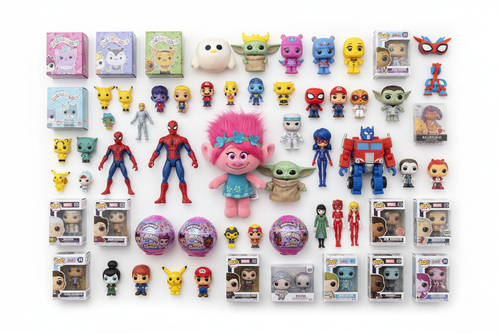
Our curated collection includes options for every age and interest, from collectible mystery packs to licensed character figures.

The Bottom Line
In a world of flashy electronic toys and constant screen entertainment, simple action figures remain one of the most developmentally valuable toys you can provide. They require nothing but imagination, yet they support virtually every area of child development—cognitive, social, emotional, and physical.
By understanding the science behind imaginative play and providing your child with quality action figures and the time to play with them, you're investing in their development in ways that will benefit them throughout their lives.
Ready to support your child's development through play? Explore our complete action figure collection, carefully selected for quality, safety, and developmental value!